
Dual Eye Technology: Precision and Longevity
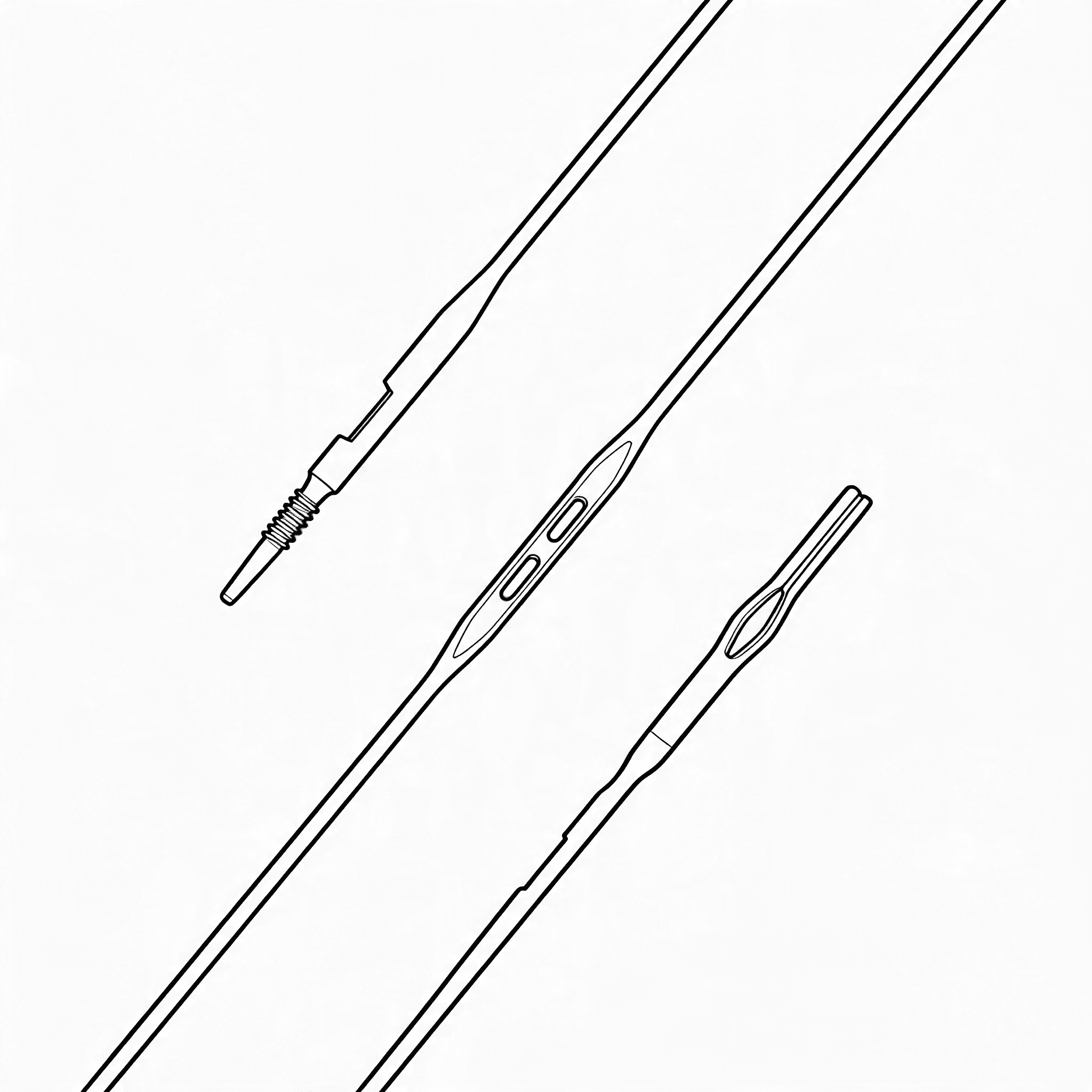
Service life is one of the most direct drivers of heald total cost of ownership — and one of the most frequently underestimated. The cost of a heald replacement is not simply the cost of the new heald: it includes the downtime to perform the replacement, the labour to carry it out, the production disruption of the loom stop, and the quality risk of the restart. AAS Tech's dual-eye technology addresses all of these costs simultaneously through a single design innovation.
How Dual-Eye Design Works
Dual Eye Technology provides greater control and a longer product lifespan — simply flipping the heald to its second eye position. A conventional single-eye heald reaches end of service life when the eye contact surface has worn beyond its operational specification. At that point, the heald must be replaced regardless of the condition of the remainder of the component. The single-eye design concentrates all wear at one location — and when that location fails, the whole component fails.
AAS Tech's dual-eye design distributes this wear across two eye positions. When the primary eye contact zone reaches its wear threshold, the heald is flipped to expose a fresh, unworn secondary eye contact zone — extending the component's service life to the equivalent of two full heald lifecycles. This eliminates the residual value loss inherent in single-eye heald replacement and reduces replacement frequency by up to 50% compared to single-eye designs under equivalent operating conditions.
Lower Yarn Guide Numbers
AAS healds can accommodate lower yarn guide numbers, giving manufacturers the flexibility to switch between different yarn types without changing the heald type. This production flexibility reduces inventory complexity and enables faster product changeovers — two factors that increasingly define competitiveness in markets characterised by shorter production runs and greater yarn specification diversity.
“Dual-eye technology is precision in the service of economics. The engineering is exact — but the outcome is straightforward: you get two service intervals from one heald, and the yarn runs on a fresh contact surface for each of them.”
— AAS Tech Engineering Team
Consistent Performance Across Both Eyes
Both eye positions on an AAS Tech dual-eye heald are manufactured to the same specification — same surface finish, same contact geometry, same dimensional tolerances. When the heald is flipped, the operational performance does not change. Mills do not need to adjust loom settings, tension parameters, or speed targets when transitioning from one eye position to the other. The consistency that defines AAS Tech's heald performance applies across the full extended service life, not just the initial installation period.
For more information, contact info@aastech.co.
Related Articles
Stay Ahead of the Industry
Subscribe for engineering insights, performance strategies, and AAS Tech innovations delivered to your inbox.